

Investing in the People Who Arrive First
By Elizabeth Wasunna, General Manager, AAR KENYA
There’s a moment that decides everything. A split second on the Nairobi-Nakuru highway, a child’s gasp in a far-flung homestead, a heart attack at a city desk, a construction worker’s fall in a booming county town. In Kenya, these moments unfold every day, and what happens in the first minutes after can mean the difference between life and death.
Yet for all our talk about Universal Health Coverage and building new hospitals, we consistently miss the mark on one crucial piece: what happens before the hospital, the emergency medical services (EMS) that make-or-break outcomes. EMS are not just about ambulances with sirens. They’re about the highly trained Kenyans—EMTs and paramedics, who are first to arrive, stabilising patients at the scene, whether on a dusty highway or in a cramped living room.
The evidence is clear: early intervention saves lives. Road crashes, heart attacks, strokes, survival rates soar when skilled responders act swiftly. The World Health Organization reports that road injuries are now a top killer of young people in countries like ours. Our cities are swelling, roads are busier, and disasters, both natural and man-made are coming faster. Without robust EMS, our healthcare gains risk being undone at the very first hurdle.
But EMS in Kenya is still largely invisible. Most people only see the hospital, the doctors, the nurses. Yet, behind every patient who makes it to the emergency room, there is often a story of a paramedic who made a critical call, delivered life-saving care en route, and bought precious time. These are not mere ambulance drivers; they are professionals who carry life in their hands.
Having worked in emergency care myself, I’ve seen both sides: patients who beat the odds because help arrived in time, and families left shattered when it did not. The lesson is always the same: the journey to survival starts well before the hospital gate.
If we want a healthcare system that works, we must invest in people, not just metal and concrete. Kenya needs more EMTs and paramedics, better training colleges, and clear professional standards. Counties must not only buy ambulances, but ensure they’re staffed by qualified teams. And we must teach the public what to do in a crisis when to call for help, and what to expect when it arrives.
Let’s make EMS a career worth pursuing for the next generation. It is a chance to serve, to build a meaningful career, and to anchor Kenya’s place as a leader in emergency medicine—here and abroad.
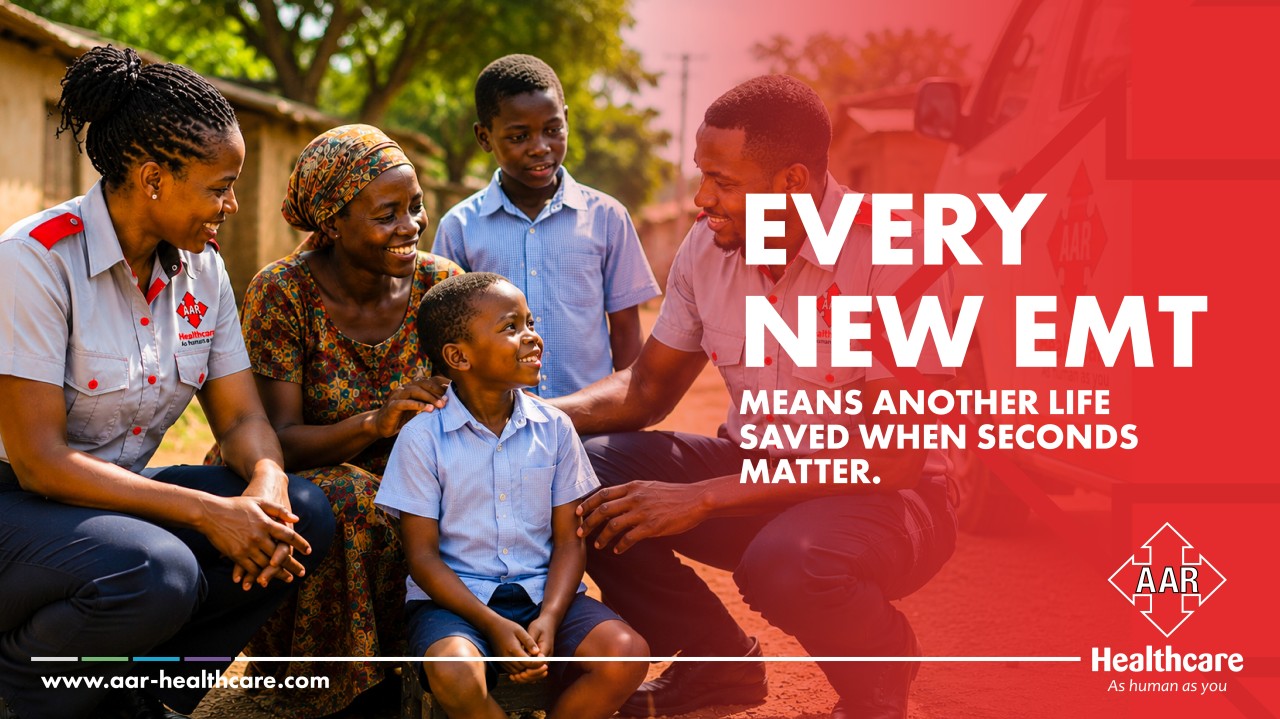
Every new EMT is another set of hands ready when seconds count. Emergencies won’t wait. The only question is: will we be ready?
In the end, investing in EMS is about giving every Kenyan a shot at surviving their hardest day. Let’s make sure we have the right people on the road, ready to answer the call because that’s where the real work of saving lives begins.
At AAR Healthcare we invite passionate individuals to join us on the frontlines of emergency care. Enroll for our EMT course—6-9 months of hands-on training, a 3-4 month hospital/ambulance attachment, and real career opportunities. Next intake: September 2026.